
Song Clearance Sheet
4 sources citedAlone Again
Hip-Hop1990s88BPM
C♯ minKey
More around 90 BPM → · More in C♯ minor →
Tempo/key via GetSongBPM →
The verdict
Documented Sampling History
The underlying legal history is fully documented — including a formal refusal of permission and a resulting injunction — but no clearance was ever granted; this venerable foundational case demonstrates what happens when a sample isn’t cleared, not an example of one that eventually was. (Grand Upright Music v. Warner Bros., 1991: O’Sullivan refused the license, Biz Markie used the sample anyway, and Judge Duffy’s “Thou shalt not steal” ruling backed the refusal with an injunction and $250,000 in damages — establishing that samples must be licensed before release.)
Quick Facts
Released1991
AlbumI Need a Haircut
GenreHip-Hop
LabelCold Chillin’ / Warner Bros. Records
ProducerBiz Markie
More infoWikipedia → · Discogs →
Who you need to ask
The sampled songwriter of record — Gilbert O’Sullivan
Wikipedia → · checked Jul 2026
The current administrator — Grand Upright Music, Ltd. (as of 1991) — present-day needs a Songview/Discogs lookup
Unknown · checked Jul 2026
Has it been reused?
This is the case that made sample clearance legally mandatory. In this instance the sample was refused, litigated, and the record enjoined — see the ruling in Rights Status.
Do they allow reuse?
The precedent this very case set is that you must obtain a license before release; here, O’Sullivan refused and a court enjoined the release.
Related Songs
Same album, answer records, and songs worth knowing about
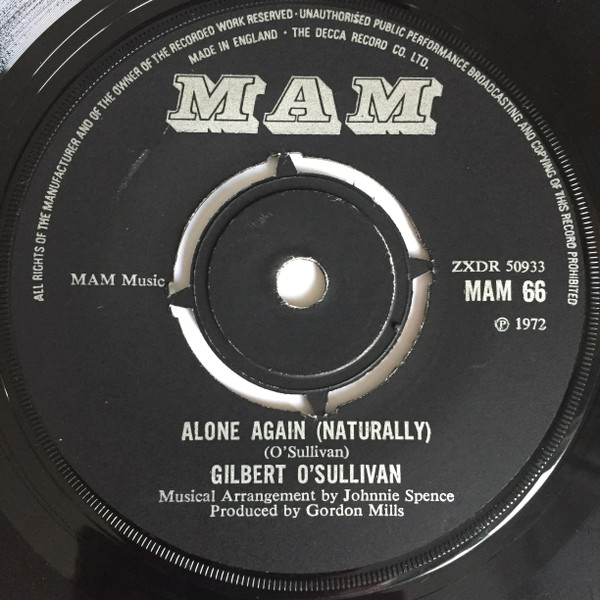
The sampled 1972 hit at the center of the case (already in this catalog)
Who Owns It
Licenses explained →The two permissions you need, and who holds them
The sampled song (the writing)Raymond “Gilbert” O’Sullivan
The foundational sample-clearance rulingGrand Upright Music, Ltd. v. Warner Bros. Records Inc., 780 F. Supp. 182 (S.D.N.Y. 1991). Judge Kevin Thomas Duffy ruled decisively for O’Sullivan, opening his opinion with “Thou shalt not steal” and finding the defendants knowing infringers specifically because they had already sought and been DENIED a license, then used the material anyway. The court granted a preliminary injunction banning further sale of the single or album, and Biz Markie was ordered to pay $250,000 in damages; the judge referred the matter for potential criminal prosecution, though the U.S. Attorney declined to bring charges. This single ruling established as binding precedent that unauthorized sampling constitutes copyright infringement — requiring all future sampling to be formally licensed before release.
The sampled work (current administrator)Copyright passed from NAM Music, Inc. to Grand Upright Music, Ltd. (the plaintiff) after NAM Music’s dissolution
Receipts
Every public mention of terms, policy, or past deals we've found
A genuinely critical fact: they asked, were refused, and used it anyway
Biz Markie’s own team had directly contacted O’Sullivan and his agent seeking a license before release. O’Sullivan explicitly refused permission — Markie and his label used the sample anyway, releasing the album regardless. The court treated this as decisive evidence of knowing infringement. No lyrics reproduced.
Justia (court opinion) · read it →
A genuinely significant, industry-wide impact
The ruling made dense, many-sampled records (like Public Enemy’s Bomb Squad-produced albums) prohibitively expensive to produce and drove widespread adoption of “interpolation” (re-recording a melody rather than sampling the original). Later case law reshaped it further — the 2005 Sixth Circuit’s Bridgeport v. Dimension Films took an even stricter line (“get a license or do not sample”), while the 2016 Ninth Circuit’s VMG Salsoul v. Ciccone reintroduced a “de minimis” exception, creating a real circuit split.
CLL (Copyright Developments Blog) · read it →
A genuinely delightful, self-aware response
Biz Markie’s next album, released in direct response to the saga, was titled “All Samples Cleared!” — its cover depicting him simultaneously as a prisoner pleading from a witness stand and a judge on the bench, labeled “The Honorable Biz Markie.”
IP & Media Law Updates · read it →
Can You Use It for Free?
How to check PD →Is it public domain?No
Sample History
—
Times sampled
The landmark Grand Upright Music v. Warner Bros. (1991) case
Covers
—
First flip
Who to Contact
AA
Grand Upright Music, Ltd. (Gilbert O’Sullivan)
The rightsholder who prevailed in the foundational 1991 case
What they'll chargeNobody's shared numbers yet
Don't Want the Hassle?
Sample something pre-cleared insteadCheck Tracklib →
Find a similar sound that's 100% freeBrowse the catalog →
Was this page helpful?
Page history · 2 updates
Jul 2026Page created — full research (Research Queue Batch 11)
Jul 2026BPM/Key pending the automated GetSongBPM/Deezer pass